
Moving Substantial Trees Without Removal
Large Tree Transplanting in Santa Fe & Alvin, TX, for site development projects requiring preservation of significant landscape specimens
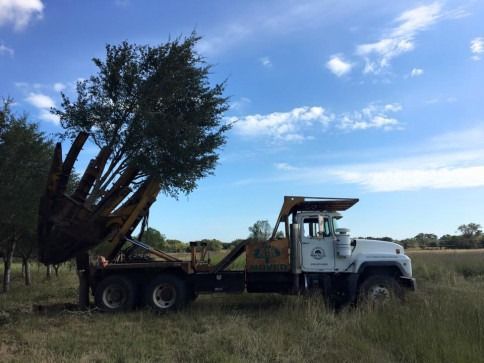
Site development often conflicts with the location of large trees that provide irreplaceable shade and landscape value. These trees, typically exceeding eight inches in trunk diameter, require specialized transplanting equipment capable of excavating and moving root balls that can weigh multiple tons while maintaining soil integrity throughout the process. Wagner Tree Farm uses hydraulic tree spades and transport equipment designed specifically for large specimen relocation, coordinating moves with development timelines to minimize project delays while maximizing transplant success.
The transplanting process begins with site assessment to identify receiving locations with adequate soil depth, drainage, and clearance for mature canopy spread. Excavation preserves a root ball proportional to trunk caliper and canopy size, and mechanical stabilization prevents the soil mass from breaking apart during lifting and transport. In Santa Fe's climate, transplanting during cooler months reduces water stress on the compromised root system and allows the tree to allocate resources toward root recovery rather than supporting active foliage.
Arrange an on-site evaluation to determine equipment access routes and identify suitable relocation sites for specific large trees in Alvin, TX.
What Large Tree Transplanting Actually Accomplishes
Professional large tree transplanting requires tree spade equipment with blade depth and basket diameter sized to the specimen, typically ranging from forty-four inches to ninety inches depending on trunk caliper. The hydraulic system applies even pressure during excavation to sever roots cleanly rather than tearing them, and root ball wrapping with burlap and wire basket maintains soil mass cohesion during the move. Strategic planning identifies the new location before excavation begins, with the receiving hole pre-dug to specifications that prevent settling or drainage issues after installation.
After transplanting, you'll notice the tree stands at the same soil depth as its original location with the trunk flare visible at grade, backfill soil contacts the root ball completely without gaps, and staking cables allow controlled movement without permitting root ball shifting. The tree retains most of its canopy through the first growing season, with normal spring bud break indicating successful root establishment in the new location.
Complete transplanting service includes excavation timed to minimize root exposure, transport that prevents root ball damage, installation at proper depth and orientation, and initial watering that eliminates air pockets in backfill soil. Follow-up care recommendations address irrigation frequency, mulch application, and canopy monitoring throughout the establishment period when the tree is most vulnerable to stress.
Common Questions About This Service
Large tree transplanting involves logistical and biological considerations that differ significantly from moving smaller specimens or installing new plantings.
- What size trees can be successfully transplanted? Trees up to twelve inches in trunk caliper are routinely transplanted with specialized equipment, though larger specimens require increasingly extensive root ball sizes and proportionally longer recovery periods to re-establish adequate root mass.
- How does equipment access affect transplanting feasibility? Tree spade equipment requires clear access routes to both the existing and receiving locations, with adequate width for the machine and overhead clearance for the canopy during transport, which may limit relocation options on properties with narrow gates or overhead utilities.
- What happens if the tree shows stress after transplanting? Leaf wilting or premature leaf drop indicates water stress from reduced root capacity, requiring adjusted irrigation and possible canopy reduction to balance moisture demand with available uptake until new root growth extends into surrounding soil.
- Why does timing matter for large tree moves in Santa Fe? Dormant season transplanting between November and February reduces water demand when root systems are compromised, which is particularly important given the area's hot summers that would otherwise compound transplant shock with heat stress.
- What site conditions affect transplant success? Soil drainage, depth to hardpan or bedrock, and proximity to structures or utilities influence whether the receiving location can support long-term root development without future conflicts that would compromise the tree's health or require additional relocation.
Wagner Tree Farm coordinates large tree transplanting with construction schedules and site conditions, providing strategic planning that preserves valuable landscape assets throughout development. Contact our team to discuss specific trees and receive detailed feasibility assessments for your project.